
Your Major Shaped Your Career, it also Shaped Your Debt
Choosing a field of study is one of the biggest financial decisions many students will make. Beyond shaping a career, it can also influence the amount of debt a borrower has after graduation.
Some programs require years of education or have higher costs, while others may have lower costs and shorter graduation timelines, but also lower starting salaries.
In this article, we will review debt across different fields of study to better understand why those differences exist, and how to plan regardless of your degree.
Why Debt Varies So Much by Major
Student loan debt can vary significantly from one major to another. Tuition, the type of institution attended, and the amount of education required all play a role in the total cost equation.
Tuition Differences by Program
There are a variety of educational programs available to students, each with its own requirements and duration. From theater to bioengineering, the requirements can be as different and varied as the programs themselves.
Programs that require specialized equipment, laboratory experience, or clinical training will often have higher overall costs than programs with fewer specialized requirements.
Program length can also affect the total cost. Bachelor’s programs typically follow a standard four-year timeline, while graduate and professional programs extend beyond that timeline with additional years of study.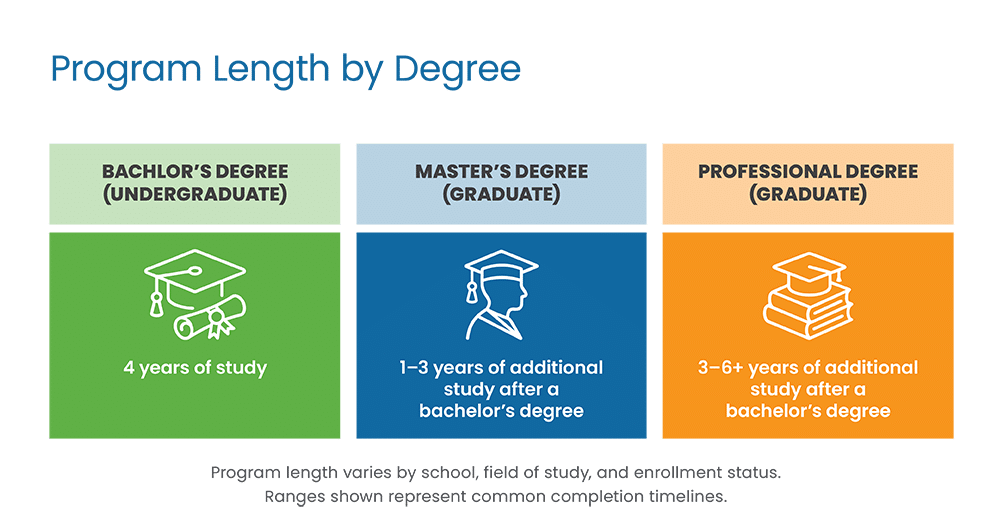
Overall, degrees that require additional time, internships, or clinical rotations may increase both tuition expenses and living costs, which can lead to higher borrowing.
Graduate vs. Undergraduate Debt
Whether a borrower continues their studies beyond a bachelor’s degree is another factor that can increase student debt.
Graduate and professional programs generally require additional years of study, allowing borrowers to accumulate new loans while they may still be carrying debt from their undergraduate studies.
According to the Education Data Initiative, graduate degree holders owe an average of approximately $102,790 in cumulative federal student loan debt, including both undergraduate and graduate borrowing. By comparison, undergraduate degree holders owe an average of $35,639.
In general, this means that borrowers who earn graduate degrees often graduate with higher average loan balances than those who stop after earning an undergraduate degree.
Public vs. Private Institution Costs
Public universities generally receive state funding, which can benefit in-state residents with lower tuition costs. However, private universities generally do not receive state funding, which requires them to fund themselves through tuition, endowments, and other sources.
Why does this matter?
This means that many private universities cost more than public universities for students to attend.
According to the National Center for Education Statistics (NCES), in the 2021-22 academic year, the average net price of attendance for first-time, full-time undergraduate students at four-year public institutions was approximately $15,200 after grants and scholarships.
According to the same data, the average net price of attendance at a four-year private nonprofit institution was approximately $29,700, which was nearly double that of a public institution.
While financial aid, scholarships, and residency status can significantly reduce the cost of attendance, higher costs at many private institutions may leave students with a larger funding gap that must be financed through savings, grants, student loans, or other sources.
Average Student Loan Debt by Degree
Individual borrowing amounts depend on many factors, but certain degree programs consistently require more years of education and can lead to higher overall costs.
Highest Debt: Medical, Law, and Graduate Programs
Graduates of medical, dental, and law programs carry some of the highest student loan debt levels, though exact amounts may vary. According to a 2025 dataset published by the Education Data Initiative, medical school graduates owe an average of $246,659 in student loan debt, including undergraduate borrowing. Dental school graduates report even higher average debt levels at $297,800, while law school graduates owe an average of $137,500.
Average Student Loan Debt by Degree Type
| Degree | Average Debt | Cost Drivers |
|---|---|---|
| Dental School | $297,800 | Tuition, clinical training, and high equipment/material costs. |
| Medical School | $246,659 | Tuition, clinical training, and extended post-graduate training period (residency). |
| Law School | $137,500 | Tuition and licensing / bar exam preparation. |
| Master's (Graduate Average) |
$102,790 | Tuition and program-specific expenses (varies by field and institution). |
Figures represent average student loan debt and may vary by institution, program structure, and borrowing mix. Some figures may include both undergraduate and graduate borrowing depending on the data source.
While these fields can lead to higher student loan debt, long-term earnings can still be substantial. According to the Bureau of Labor Statistics (BLS), occupations such as physicians, lawyers, and dentists rank among the highest median wage earners in the U.S:
Programs such as these often require significant investment, but they can also lead to high-earning careers.
Mid-Range Debt: Business, Engineering, and Nursing
Business, engineering, and nursing programs generally fall into a mid-range category for student debt. Most students complete these programs at the undergraduate level, though some careers may require graduate education or additional licensure.
According to the Federal Reserve Bank of New York's Labor Market for College Graduates, majors such as engineering, nursing, business, and finance frequently report strong early-career earnings and lower unemployment rates than many other fields of study.
As with any degree program, borrowing levels and employment outcomes vary across institutions and individual circumstances.
Lower Debt, Lower Earning Potential: Arts, Education, and Humanities
In many cases, fields such as the performing arts, education, and the humanities have lower average borrowing levels, largely because they typically require a bachelor’s degree and fewer extended years of study.
However, lower debt does not always translate into easier repayment. Federal Reserve Bank of New York data show that these majors tend to have lower median early-career earnings and higher rates of underemployment than fields such as engineering, business, and healthcare.
As a result, even with lower borrowing levels, some graduates in these fields may experience higher debt pressure early in their careers.
The Outliers: High Debt, Lower Starting Salaries
Not all degree paths follow the expected pattern of higher borrowing, leading to higher earnings.
Some programs may result in relatively high student loan debt without a corresponding increase in early-career income, particularly in fields where entry-level wages are lower or employment is less consistent.
These careers are no less important, but graduates entering these fields may need to consider different repayment strategies during periods of lower income.
Debt-to-Income Ratio: The Number That Really Matters
How much debt a student owes after graduation is an important metric, but it does not always reflect how manageable repayment will be.
Comparing monthly debt to monthly income can provide a much more complete picture of a borrower's finances and repayment capacity.
This comparison is known as the Debt-to-Income Ratio (DTI).
How to Calculate Your Own Ratio
A Debt-to-Income Ratio is calculated by dividing total monthly debt payments by gross monthly income. Gross income is earnings before deductions (such as taxes). This ratio is commonly portrayed as a percentage; in general, a good DTI is considered 35% or below.
For those with student loans, a simple way to estimate your debt-to-income ratio is to compare your total monthly debt payments (including student loans) with your monthly gross income.
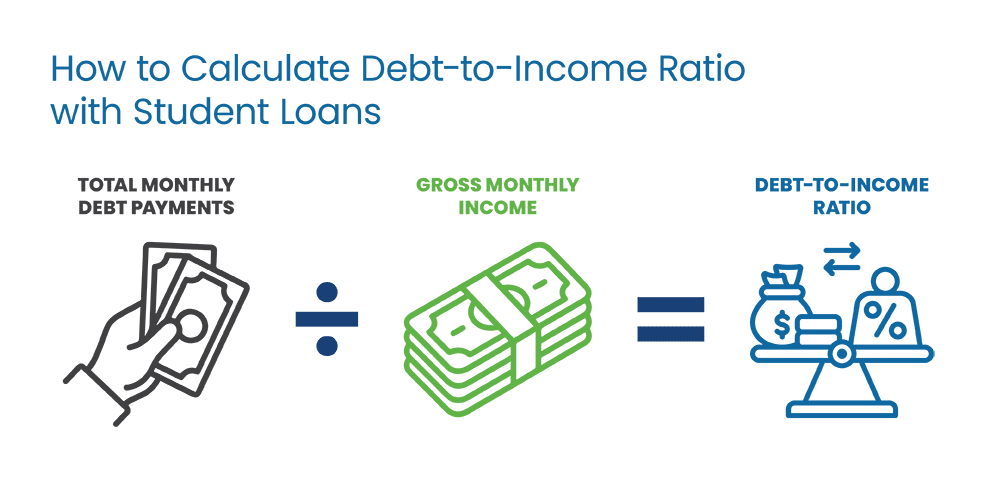
Let’s demonstrate the calculation using an example. Assume Borrower A has a gross monthly income of $6,250 and total monthly debt payments of $400.
- 400 / 6,250 = approximately 0.064
- Borrower A has a debt-to-income ratio of approximately 6.4%
DTI is strictly a measure of monthly debt payments relative to gross monthly income and does not account for interest rates, repayment plans, or other monthly expenses, which can affect how manageable a monthly loan payment is. DTI isn't just important for student loans. It's a key metric lenders use for nearly every type of credit, including buying a home with a mortgage, auto loans, and personal loans.
Which Majors Have the Best and Worst Ratios
Debt-to-income ratios are not tracked by college major, but a borrower's field of study can affect both borrowing levels and future earnings. As a result, two graduates with similar student loan balances may experience very different repayment experiences depending on their income and career trajectory.
Because every borrower's financial situation is unique, a debt-to-income ratio is best viewed as a personal financial measure rather than a reflection of the value of a particular degree.
When Debt Feels Manageable and When It Doesn’t
How manageable a student loan balance (or any debt) feels depends on several factors, including interest rates, repayment terms, and a borrower’s current financial situation.
There is no universal debt amount that is considered "too much” or “too little.”
Instead, affordability often depends on whether a monthly payment fits comfortably within a borrower's budget after accounting for housing, transportation, insurance, and other essential life expenses.
Private Student Loans by Major: A Hidden Burden
Student loans generally fall into two categories: federal and private.
Whether a borrower has a federal or private loan can be just as important as the amount borrowed, as each offers different repayment options, borrower protections, and potential forgiveness opportunities.
Who Borrows Private Loans and Why
Deciding between federal and private student loans for school is not always straightforward; some borrowers obtain both to fund their education.
Why?
Federal student loans have long been subject to annual and lifetime borrowing limits. As an example, on July 1, 2026, the U.S. Department of Education introduced new borrowing caps for many graduate, professional, and Parent PLUS loans.
Consequently, some students may turn to private student loans to help cover educational expenses not covered by federal aid, scholarships, grants, personal savings, or other resources.
In short, private loans are typically used to bridge funding gaps rather than replace federal loans entirely.
How Private Loan Terms Differ from Federal
Unlike federal student loans, which are issued by the U.S. Department of Education, private student loans are issued by lenders such as banks, credit unions, and other private entities. Loan terms, interest rates, eligibility requirements, and repayment options vary by lender.
Private student loans do not offer the same borrower protections available through the federal student loan program, such as Income-Driven Repayment (IDR) plans or federal loan forgiveness programs.
Because repayment options and flexibility vary by lender, borrowers should carefully review loan terms before accepting a private student loan or refinancing a federal student loan.
Why Private Loan Borrowers in Lower-Earning Fields Face Unique Challenges
Without access to federal Income-Driven Repayment plans and other federal borrower protections, monthly payments on private student loans may consume a significant share of a borrower's income. This can leave less room in a monthly budget for housing, transportation, and other essential expenses.
Borrowers experiencing repayment difficulty should contact their lender to discuss available options. Depending on the lender and individual circumstances, temporary hardship assistance, modified repayment options, or refinancing opportunities may be available.
What You Can Do About Your Debt, Regardless of Your Major
A major or degree is important, but it does not determine if a borrower will successfully repay their student loan debt. Successful repayment is based on understanding all available repayment options and selecting a plan that aligns with real-life circumstances and finances.
Federal Repayment Options Tied to Income
For borrowers with eligible federal student loans, Income-Driven Repayment plans can adjust monthly payments based on income and family size.
IDR plans are especially valuable for borrowers who may have difficulty affording payments under a Standard Repayment plan.
Federal repayment options vary based on loan type, income, family size, and other eligibility requirements. Borrowers should review available plans and eligibility criteria through StudentAid.gov.
Refinancing Private Student Loans Based on What You Earn
Refinancing involves replacing an existing loan with a new loan, ideally with better terms such as a lower interest rate, different repayment terms, or a lower monthly payment. Unlike federal loans, private lenders generally do not offer repayment plans based on income and family size. Refinancing eligibility depends on multiple factors such as income, credit history, and lender-specific requirements.
Refinancing may offer some borrowers better terms, but it is important to carefully review any new loan agreement and understand the possible impacts of refinancing, including the loss of certain federal borrower protections (if applicable).
Building a Repayment Strategy Around Your Field
There is no “perfect” repayment strategy for a specific field. The key to building a successful repayment strategy is understanding how income, career path, and financial goals affect repayment planning.
Graduates entering fields with longer training periods or lower starting salaries may need to focus on repayment strategies that offer flexibility, while borrowers entering higher-income fields may seek opportunities to accelerate repayment.
Borrowers with federal loans can use tools and repayment calculators available through StudentAid.gov to compare options. Borrowers with private student loans should review their lender’s website for information about available repayment planning options.
A college, graduate, or professional degree can influence both the amount of funding required for school and career opportunities available after graduation. It’s important to remember, however, that a degree alone does not determine a borrower's long-term financial future.
Student loan repayment success depends on a combination of factors, including income, repayment strategy, loan type, and overall financial planning.
Do you have delinquent or defaulted private student loans? If so, Yrefy may be able to help. Yrefy works with borrowers who may not qualify for traditional refinancing, including those with bad credit (eligibility requirements and terms apply).
Your major doesn’t have to define your repayment. See what's possible with income-based refinancing. Learn more about Yrefy's refinancing options by contacting us at (866) 816-7649 or filling out our contact form; a member of the team will reach out.
Disclaimer: This article is for informational purposes only and should not be considered legal, tax, or financial advice. Please consult a qualified financial advisor or attorney regarding your specific student loan situation.